Relative Value72balanced preset

Capability ignores price. Relative Value adds the current dataset offers and your priorities. Keeping them separate prevents a cheap product from being mistaken for the faster product.
| Scenario | RTX 5060 | RX 6800 |
|---|---|---|
| 1080p Gaming | A#35 | A#30 |
| 1440p Gaming | B#35 | B#30 |
| 4K / VR | D#35 | C#30✓ |
| Ray Tracing @ 2K (1440p) | D#31 | N/A |
| AI / Local LLM | C#36✓ | D#50 |
| 3D Rendering | C#22✓ | D#38 |
| Light Use & Efficiency | B#13✓ | C#39 |
RTX 5060 grades higher in 3 scenarios, RX 6800 in 1 (2 tied) — the lead is not across the board, so check the row that matches your use. 1 scenario can't be graded for one of them (shown as N/A). These are the same S–F grades as the tier list — capability only, price excluded. The value rows below add prices from the 2026-09-08–2026-09-09 offer frame. How tiers are assigned →
Both products are normalized within the same in-stock market frame per preset. A check marks the higher Relative Value; a difference of 3 points or less is shown as practically even.
Current offers, crossover points and Strong Value thresholds answer different questions. Thresholds are calculations, not price forecasts.
Dated New-condition price snapshots for only the two products in this comparison. Confirm the final price and availability at the store.
Price is intentionally excluded here so the more capable product and the better-value product cannot be confused.
Only verified structured fields are shown. Physical fit, connectors, cooling and typical warranty belong to the representative tracked partner card named in each column; other board variants can differ.
Over 3 years at 4h/day and $0.15/kWh, RTX 5060 (145 W) adds about $48 in modeled electricity and RX 6800 (250 W) about $82. The modeled difference is roughly $34. This uses rated power as a common comparison input, not a promise of wall-power consumption.
Reference-GPU fields and representative-offer fields are labelled separately. Directional checkmarks appear only where more or less has a clear meaning; they are not an overall verdict.
| Specification | RTX 5060 | RX 6800 |
|---|---|---|
| Architecture | Blackwell 2.0 | RDNA 2.0 |
| VRAM | 8 GB | 16 GB✓ |
| Memory type | GDDR7 | GDDR6 |
| Memory bus | 128-bit | 256-bit✓ |
| Host interface | PCIe 5.0 x8 | PCIe 4.0 x16 |
| Boost clock | 2,595 MHz | 2,155 MHz |
| Board power (lower is better) | 145 W✓ | 250 W |
| Suggested PSU (representative offer) | 300 W | 600 W |
| Power connectors (representative offer) | 1x 8-pin | 2x 8-pin |
| Card length (representative offer) | 281 mm✓ | 286 mm |
| Warranty (representative offer) | 36 mo | 36 mo |
| Current dataset offer · New | $460snapshot 2026-09-09✓ | $790snapshot 2026-09-09 |
| Specification | RTX 5060 | RX 6800 |
|---|---|---|
| Process node | 5 nm | 7 nm |
| Base clock | 2,280 MHz | 1,775 MHz |
| Memory data rate | 28 Gbps | 16 Gbps |
| Expansion slots (representative offer) | 2-slot✓ | 3-slot |
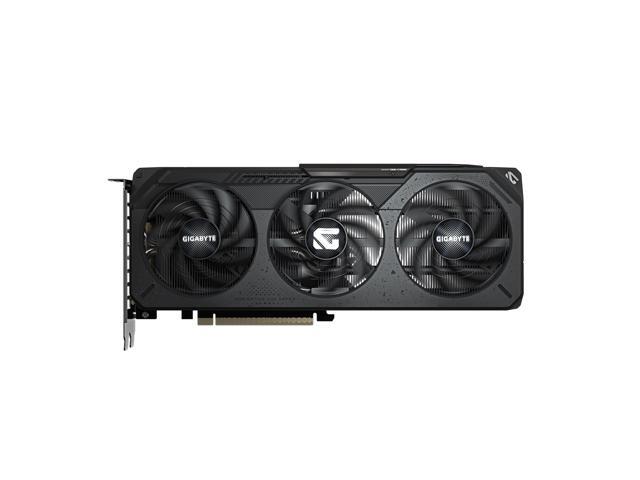
| Cooling fans (representative offer) | 2 | 3 |
| Display outputs (representative offer) | 1× HDMI · 3× DisplayPort | 2× HDMI · 2× DisplayPort |
| Cooling type (representative offer) | air | air |
“Not tracked” means the source data does not contain a verified value; no default or guessed specification is substituted.
Presets are starting points. Swap either side, then open Advanced weights only if you want to tune the formula directly.
The same scenario and market frame checks whether another currently priced model offers a cleaner trade-off.
The scenario-aware check did not find a currently priced alternative that improves this decision without changing the trade-off. This is a dataset result, not a claim that no other product exists.
These are evidence-linked conditions, not universal buying verdicts. Feature ecosystems, software support and platform preferences remain your call.
The formula is a linear weighted sum inside the current comparison frame. Capability, price and user priorities stay visible as separate inputs so the result can be challenged and changed.
Offer frame: 2026-09-08–2026-09-09 · dataset generated 2026-09-09 · formula gpu-value-v1.4-benefit-cost-product · Value Score is an estimate based on our current dataset, selected weights, market prices and methodology — not an official product rating or a price forecast. Target prices are calculation thresholds, not predictions. Methodology · Report a data error